
 Blinkers Flip 2g
 Buzz Bar 2g
 The Smoothie Bar
What Is AIOVAPEPRO? Empty Vape Hardware, OEM/ODM & Supply Capabilities

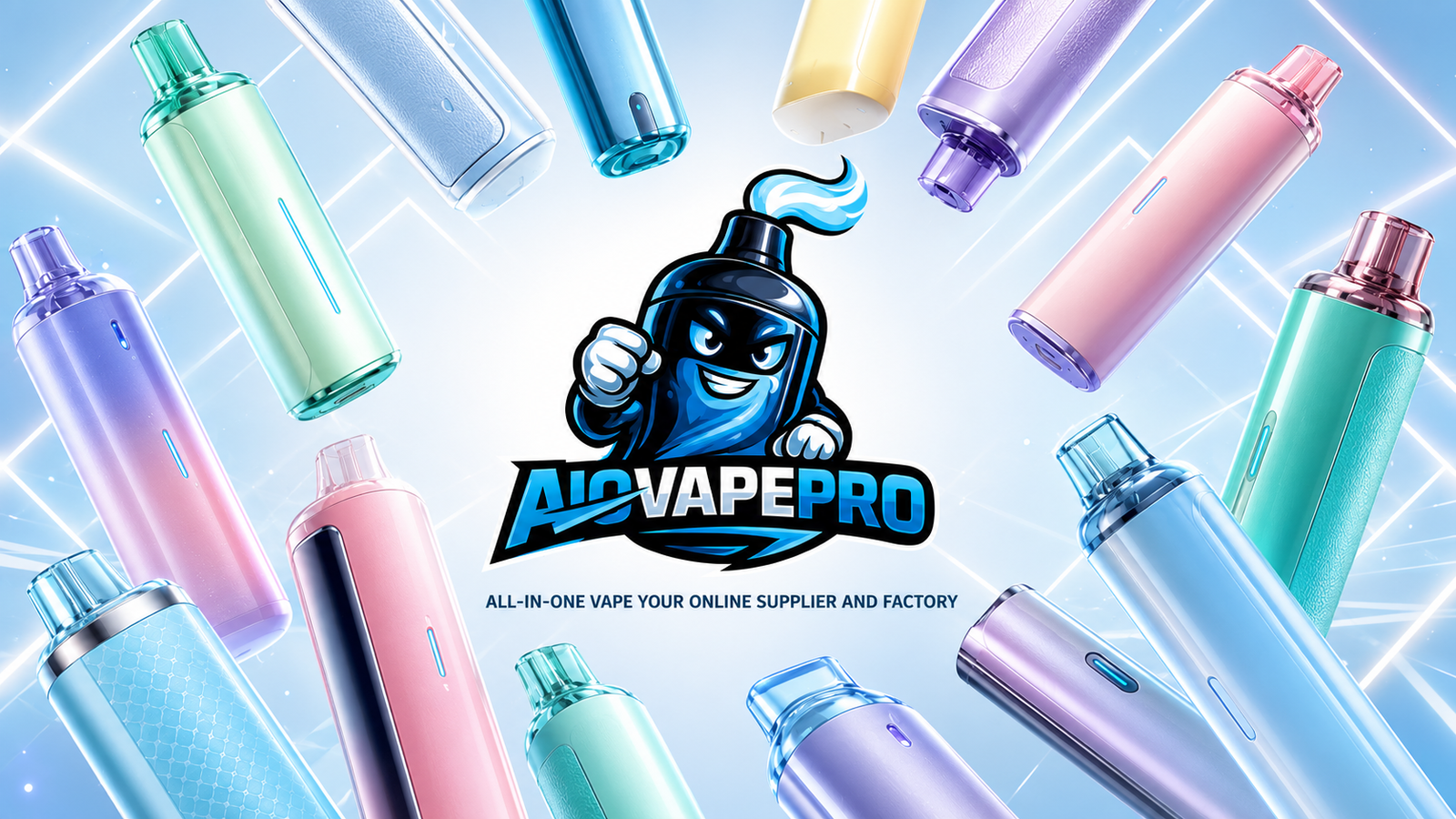
AIOVAPEPRO is a B2B supplier focused on empty all-in-one vape hardware and related customization services.
Its product range includes different hardware formats such as single-chamber disposables, dual-chamber devices, multi-reservoir designs, screen-equipped hardware, and models developed for private-label projects.
For brands, distributors, manufacturers, and other qualified business buyers, understanding what a hardware supplier actually provides is more useful than relying on broad labels such as “vape shop” or “wholesale distributor.”
This guide explains the main areas AIOVAPEPRO focuses on, how its empty hardware model works, and what buyers should evaluate before selecting hardware for a project.
What Does AIOVAPEPRO Supply?
AIOVAPEPRO primarily focuses on empty vape hardware rather than pre-filled finished products.
That distinction is important.
In the United States, FDA regulation of electronic nicotine delivery systems (ENDS) can extend beyond finished e-cigarettes to certain components and parts, including atomizers, tanks, mouthpieces and certain batteries. Buyers developing products for nicotine or tobacco applications should therefore evaluate the regulatory status of both the hardware and the finished product.
Depending on the model, hardware may include components such as:
- oil reservoirs;
- heating elements;
- battery systems;
- airflow structures;
- charging interfaces;
- activation controls;
- display modules;
- external housings.
Different models use different configurations, so buyers should always review the specification sheet for the exact device being considered.
Main Hardware Categories
AIOVAPEPRO’s catalog includes several common all-in-one hardware formats.
Single-Chamber All-in-One Devices
Single-chamber hardware uses one reservoir and one primary formulation path.
This format is generally simpler to fill, test, and operate than more complex multi-reservoir designs.
Available capacities and battery specifications vary by model.
For product development, buyers should verify:
- nominal reservoir volume;
- coil resistance;
- recommended formulation viscosity;
- battery specification;
- charging method;
- filling procedure.
Dual-Chamber Hardware
Dual-chamber devices divide the internal reservoir system into two separate chambers.
Depending on the specific architecture, this type of hardware may support separately filled formulations or flavor profiles within one device.
Dual-chamber designs require additional evaluation because both sides should perform consistently.
Testing should include:
- chamber separation;
- switching behavior;
- coil consistency;
- airflow;
- leakage;
- battery behavior;
- repeated-use performance.
The actual operating logic differs between models, so buyers should not assume that every dual-chamber device functions in the same way.
Multi-Chamber Hardware
Some newer all-in-one formats use more than two reservoirs.
These designs can increase formulation flexibility, but they also increase hardware and filling complexity.
When evaluating multi-chamber devices, buyers should pay particular attention to:
- reservoir isolation;
- filling accuracy;
- electrical control;
- airflow balance;
- switching mechanism;
- internal sealing.
Sample validation becomes increasingly important as the number of independent chambers increases.
Hardware With Digital Displays
Some disposable hardware integrates screens or digital indicators.
Depending on the device, a screen may be designed to display information such as:
- battery status;
- active chamber;
- device mode;
- other operating indicators.
The exact information displayed should be confirmed from the specification of the individual model.
Buyers should also verify how accurately the displayed information reflects actual battery or device status.
Empty Hardware vs. Finished Vape Products
AIOVAPEPRO’s hardware-focused model should not be confused with the manufacturing or retail sale of a finished formulated product.
Empty hardware provides the physical platform.
The final product may involve additional stages such as:
- formulation development;
- compatibility testing;
- device filling;
- capping;
- resting or aging;
- packaging;
- labeling;
- quality inspection;
- market-specific compliance review.
For this reason, selecting hardware is only one part of the finished-product development process.
The device should be tested with the actual intended formulation before commercial production.
Why Formulation Compatibility Matters
One of the most important questions in vape hardware sourcing is whether a particular formulation is compatible with a specific device.
Compatibility can be influenced by:
- viscosity;
- temperature;
- terpene concentration;
- heating characteristics;
- inlet design;
- coil architecture;
- airflow;
- filling volume.
A device that performs well with one formulation may behave differently with another.
For this reason, hardware should not be described as universally compatible without testing.
A practical qualification process is to fill sample units using the intended formulation and monitor them under representative storage and operating conditions.
OEM and ODM Capabilities
For projects requiring more than stock hardware, AIOVAPEPRO also describes OEM and ODM customization as part of its B2B service model.
Customization may vary by project and device platform.
Potential areas can include:
- housing color;
- surface finish;
- logo application;
- printed graphics;
- reservoir window design;
- device packaging;
- inserts;
- display graphics;
- hardware configuration.
Not every option is available at every order quantity.
Before beginning a custom project, buyers should confirm:
- minimum order quantity;
- tooling requirements;
- artwork specifications;
- sample fees;
- production lead time;
- packaging requirements;
- approval procedure.
All specifications should be confirmed before mass production begins.
A Typical Hardware Evaluation Process
A structured evaluation process helps reduce the risk of selecting hardware based only on photos or marketing descriptions.
Step 1: Define the Project
Start by identifying the intended:
- capacity;
- formulation characteristics;
- hardware format;
- target packaging;
- device features;
- destination market.
This helps narrow down which hardware platforms are relevant.
Step 2: Review Specifications
Request the available technical information for shortlisted models.
Useful specifications may include:
- reservoir capacity;
- battery capacity;
- coil resistance;
- operating voltage;
- charging parameters;
- dimensions;
- material information;
- filling instructions.
Specifications should correspond to the exact hardware revision being sampled.
Step 3: Test Samples
Physical sample testing is essential.
Depending on the project, testing can cover:
- filling;
- leakage;
- clogging;
- airflow;
- activation;
- heating consistency;
- battery behavior;
- storage stability.
Dual- or multi-chamber devices should be tested on every chamber.
Step 4: Confirm Customization
If custom branding or packaging is required, approve:
- artwork;
- colors;
- dimensions;
- printing position;
- packaging layout.
Prototype or pre-production samples can help identify problems before the full production run.
Step 5: Define Quality Requirements
Before production, buyers and suppliers should agree on measurable quality requirements.
These can include:
- cosmetic tolerances;
- functional inspection;
- leakage criteria;
- electrical tests;
- packaging inspection;
- defect handling.
This is more useful than relying on general descriptions such as “premium quality.”
What Should Buyers Ask About Quality Control?
Quality control should focus on measurable production characteristics.
Depending on the hardware, useful questions include:
- What coil-resistance tolerance is accepted?
- How is battery functionality tested?
- How is reservoir sealing inspected?
- Is airflow tested during production?
- What electrical safety checks are performed?
- How are cosmetic defects classified?
- Are finished units sampled from each production batch?
- What happens when a batch exceeds the agreed defect threshold?
- What material or battery documentation is available?
- Can third-party inspection be arranged if required?
The relevant standards will depend on the hardware, project, and destination market.
Regional Inventory and Supply
AIOVAPEPRO also describes regional inventory and overseas warehousing as part of its supply model.
Regional inventory can potentially reduce the distance between available stock and qualified business customers.
However, warehouse availability should be confirmed for each order because:
- not every SKU is stored in every location;
- inventory changes over time;
- dispatch time varies;
- destination restrictions may apply.
For this reason, buyers should confirm the warehouse location and current stock of the exact model they need rather than assuming that every product is available locally.
What to Verify Before Ordering From Any Hardware Supplier
Regardless of supplier, serious hardware sourcing should involve verification.
Before committing to production, consider confirming:
Product Specifications
Make sure the written specification matches the physical sample.
Sample Performance
Test the exact formulation and filling method intended for use.
Manufacturing Consistency
Ask how the supplier controls differences between samples and mass-production units.
Battery Documentation
Rechargeable lithium-powered hardware may require specific documentation for transportation and handling.
Materials
Request available material information relevant to the intended application.
Packaging
Confirm dimensions, printing, labels, and packing quantities before production.
Applicable Regulations
Regulatory requirements vary significantly by market.
The business responsible for the finished product should determine the rules that apply to manufacturing, distribution, labeling, transport, and sale in the relevant jurisdiction.
What Makes a Useful Hardware Supplier Relationship?
A productive B2B hardware relationship depends less on promotional claims and more on technical communication.
A supplier should be able to discuss:
- specifications;
- compatibility;
- testing;
- samples;
- customization;
- production;
- quality requirements;
- documentation;
- inventory.
Buyers should also be prepared to provide accurate information about their formulation and project requirements.
The more clearly both sides define these requirements, the easier it becomes to determine whether a hardware platform is suitable.
AIOVAPEPRO in Summary
AIOVAPEPRO focuses on empty all-in-one vape hardware for B2B projects, including single-chamber, dual-chamber, multi-chamber, and screen-equipped formats.
Its broader service offering includes stock hardware, product sampling, OEM/ODM customization, packaging-related options, and regional supply depending on the specific project and inventory.
For buyers evaluating AIOVAPEPRO or any other vape hardware supplier, the most important approach is the same:
verify specifications, test physical samples, confirm formulation compatibility, review documentation, and define quality requirements before production.
That process provides a much stronger basis for hardware selection than relying on capacity, appearance, or marketing claims alone.
Frequently Asked Questions
What does AIOVAPEPRO primarily supply?
AIOVAPEPRO focuses on empty all-in-one vape hardware for B2B applications rather than describing every listing as a finished pre-filled product.
Does AIOVAPEPRO offer dual-chamber vape hardware?
Yes. Dual-chamber devices are among the hardware formats currently represented in the company’s product catalog.
Does AIOVAPEPRO provide OEM or ODM customization?
AIOVAPEPRO describes OEM/ODM customization as part of its B2B services. Available options, minimum quantities, and lead times should be confirmed for each project.
Are all products available from overseas warehouses?
Not necessarily. Regional inventory depends on the specific SKU, destination, and current stock. Availability should be confirmed before ordering.
Should hardware samples be tested before production?
Yes. Sample testing with the intended formulation is one of the most important steps before approving larger production quantities.
Is one vape device suitable for every oil formulation?
No. Hardware performance can vary according to viscosity, formulation composition, temperature, coil design, airflow, and filling method. Compatibility should be tested for the intended application.