
 Blinkers Flip 2g
 Buzz Bar 2g
 The Smoothie Bar
Vape oil compatibility test Before a Bulk Hardware Order

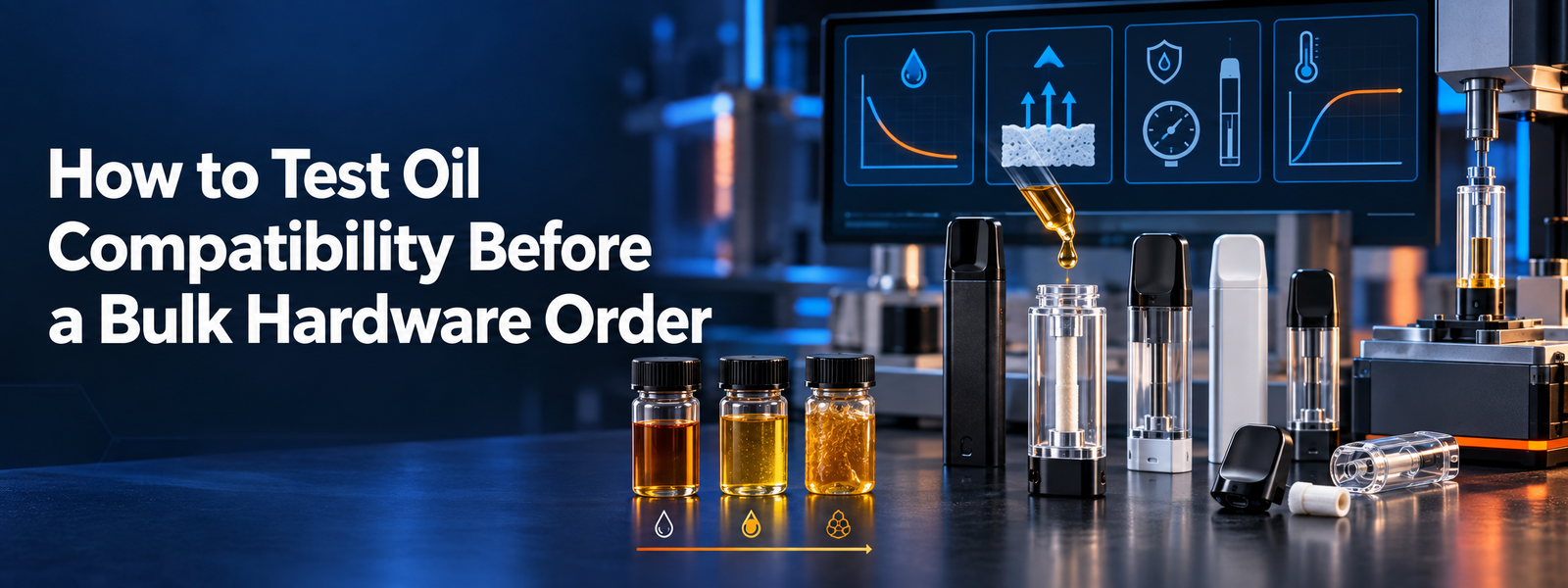
vape oil compatibility test- Use a structured compatibility test for empty vape hardware covering viscosity, wicking, leakage, materials, output, temperature storage and pilot production.
Compatibility is a system result
An empty Disposable Vape device cannot be judged separately from the formulation that will enter it. Flow behavior, wetting, temperature response and material interaction influence whether the device primes, feeds and remains sealed. A platform that works with one legal formulation can leak, clog or underfeed with another. For that reason, buyers should avoid universal compatibility claims and should never infer suitability from color, flavor name or capacity alone. The test program should use production-representative formulation and hardware.(vape oil compatibility test)
Document the test inputs-vape oil compatibility test
Record formulation batch, viscosity measurement method and temperature, fill mass or volume, device revision, coil or heater specification, cell lot, filling equipment, closure method and operator. Photograph samples and assign identifiers. Without this information, a failure cannot be traced and a passing result cannot be reproduced. Where formulation details are confidential, the buyer can still provide ranges and run filling at its own controlled facility, but the supplier needs enough information to recommend inlet and heater options.
Start with filling and priming-vape oil compatibility test
Observe fill speed, trapped air, foaming, headspace and closure force. Weigh devices before and after filling to verify the actual amount. Define a priming period and orientation, then inspect for seepage before activation. Do not accelerate the schedule by testing immediately if the design requires time for wetting. Record draw resistance and initial output on each device. A small number of samples is useful for screening, but a broader pilot is needed before commercial approval.
Test output under a repeatable protocol-vape oil compatibility test
Create a puff or activation schedule appropriate to the device and legal intended use. Keep duration, interval and environment consistent. Track activation failures, output change, dry sensations, flooding, condensation and remaining formulation. For multi-chamber hardware, test each side independently and after repeated switching. A digital display can be recorded, but screen percentages should not be treated as laboratory measurements unless their accuracy and algorithm have been validated.
Challenge storage and transport conditions-vape oil compatibility test
Store filled samples upright, inverted and on their sides. Use controlled temperature conditions representing the expected supply chain and allow devices to return to room temperature before evaluation. Inspect mouthpiece, seams, charging port and air inlets for leakage. Conduct vibration and drop tests with packaging where relevant. Define pass criteria before testing so results are not reinterpreted after failures appear. Extreme conditions should be chosen by risk assessment, not invented to create an impressive marketing claim.
Review materials and extractables risk-vape oil compatibility test
Request the materials list for components that contact the formulation, such as reservoir polymers, elastomers, adhesives, metals and absorbent materials. Compatibility includes swelling, cracking, discoloration, corrosion and migration, not only leakage. A supplier declaration can support screening, but it is not a substitute for appropriate chemical assessment. Filled-product brands should work with qualified laboratories and regulatory specialists to select analytical methods for their formulation and destination market.
Separate electrical safety from formulation testing-vape oil compatibility test
Electrical and battery evaluations address different hazards from chemical compatibility. UL explains that UL 8139 evaluates electrical, heating, battery and charging systems and does not evaluate e-liquids, vapor substances or physiological effects. Likewise, UN 38.3 addresses transport testing for lithium cells and batteries. Cite each record only for its actual scope. A product should not be described as fully certified merely because one component or one risk area has been assessed.
Move from screening to pilot production-vape oil compatibility test
After selecting a promising sample, run a pilot using production-intent hardware, filling equipment, closures and packaging. Inspect a defined sample at filling, after storage and after simulated shipment. Investigate failures and document corrective action before scaling. Retain filled and empty samples from the approved lot. AIOVAPEPRO’s sample and empty-hardware categories can support model selection, but buyers should submit their intended technical requirements and verify availability. Compatibility testing protects the launch by replacing assumptions with repeatable evidence.
Questions to send with the request for quotation-vape oil compatibility test
ISO Quality Management Principles A detailed request produces a more useful quotation and makes supplier comparisons easier. Include the project market, estimated quantity, intended schedule and answers required in writing. For this topic, ask:
- What viscosity range and temperature were used for the supplier recommendation?
- Which contact materials and seals are exposed to the formulation?
- What priming time and orientation are required after filling?
- How will output, leakage and condensation be measured consistently?
- What storage, vibration and shipping simulations reflect the real route?
- How many pilot units will be evaluated before production approval?
Review the answers against drawings, samples and model-specific records. If a material specification or document remains unavailable, record the gap and decide whether additional testing, a contract condition or another platform is required before approval. This step turns the article topic into a practical sourcing workflow and gives the buyer evidence that can be retained for repeat orders.