 Blinkers Flip 2g
 Buzz Bar 2g
 The Smoothie Bar
ODM vs OEM Vape Manufacturer for Brand Owners

Understand OEM and ODM vape manufacturing, customization scope, tooling, samples, quality agreements, intellectual property, packaging and change control. About AIOVAPEPRO
Define OEM and ODM for the project-OEM Vape Manufacturer
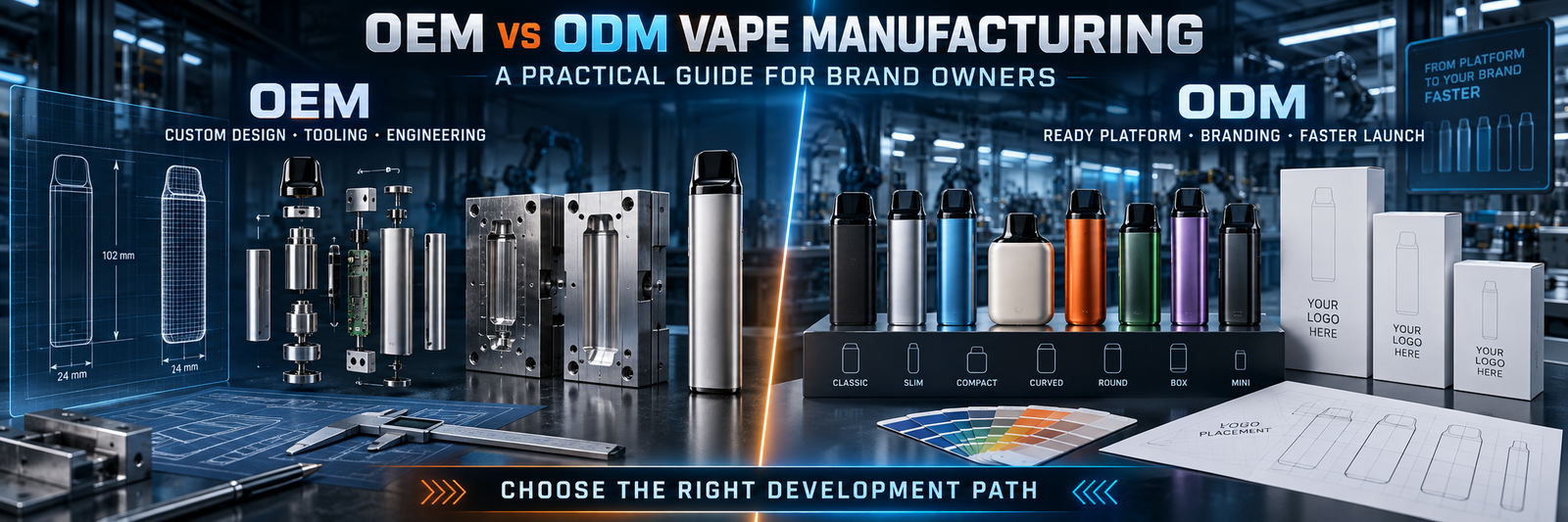
In everyday sourcing language, OEM often means producing a buyer-defined design or branded configuration, while ODM often means adapting a supplier-developed platform. Actual contracts vary, so the label matters less than the written division of responsibility. Define who owns industrial design, tooling, circuit design, firmware, packaging artwork, test methods and regulatory files. AIOVAPEPRO offers ready-to-ship models together with OEM and ODM customization, giving buyers several starting points. The chosen route should match budget, schedule, differentiation and compliance resources.
When an ODM platform makes sense-OEM Vape Manufacturer
An existing platform can shorten development because its mechanical architecture and production process already exist. The buyer may customize colors, finishes, logo placement, packaging and selected components within an approved range. This route works well when speed and controlled cost matter more than exclusive industrial design. However, existing does not mean universally validated. Test the exact selected configuration, formulation and packaging. Confirm whether other customers can purchase the same housing and whether geographic or channel exclusivity is available.
When OEM development is justified-OEM Vape Manufacturer
A deeper OEM Vape Manufacturer project may be appropriate when a brand needs proprietary ergonomics, reservoir architecture, user controls or visual identity. It can also require higher tooling investment, more engineering reviews and a longer verification cycle. Define design inputs before CAD begins: capacity, materials, dimensions, target cell, charging system, activation logic, environmental conditions, filling process and packaging constraints. Freeze requirements in stages so late artwork or structural changes do not cause uncontrolled rework.
Protect intellectual property-OEM Vape Manufacturer
A nondisclosure agreement is useful but does not answer every ownership question. Contracts should identify background intellectual property, newly created designs, mold ownership, artwork files, source files, firmware access and rights after termination. Search target-market trademarks before committing to a brand name or using third-party logos. WIPO‘s Global Brand Database offers access to trademark records from multiple collections, but a professional clearance search may still be necessary. Do not assume that a popular name, character or package style is available for private-label use.
Use samples as controlled milestones-OEM Vape Manufacturer
Separate appearance samples, engineering samples and production-intent samples. An appearance sample may confirm color and logo position without representing final internals. An engineering sample should support functional testing. A production-intent sample should use the planned materials, cell, coil, seals, firmware and packaging. Assign revision codes and keep signed golden samples. The purchase order should reference the approved revision so that approval is tied to an identifiable configuration rather than a photo or chat message.
Create a quality agreement-OEM Vape Manufacturer
A quality agreement should define critical, major and minor defects; inspection methods; sampling; lot traceability; retention samples; corrective action; and responsibility for rework or replacement. Include measurable requirements for leakage, charging, activation, cosmetic finish, dimensions and packaging. Require approval before component substitution. Supplier audit evidence and workshop descriptions can provide context, but the agreement should translate quality claims into records and acceptance decisions.
Plan regulatory responsibility by market-OEM Vape Manufacturer
Empty hardware, filled products, batteries and packaging can fall under different rules. Identify the manufacturer, importer, brand owner and responsible economic operator for each destination. In the European Economic Area, CE marking applies only when relevant harmonized requirements are met; the European Commission warns that the manufacturer is responsible for conformity assessment, technical documentation, declaration and marking where applicable. A CE logo should never be added simply because a buyer requests it.
Choose the route with total project cost in mind-OEM Vape Manufacturer
Compare platform fee, tooling, samples, artwork, testing, minimum quantities, lead time, unit price, inspection, freight and change costs. ODM can reduce upfront development but may offer less exclusivity. OEM can create stronger differentiation but requires more governance and validation. Begin with AIOVAPEPRO’s About and product-category pages, then issue a structured brief. The strongest project is not the one with the most custom features; it is the one whose responsibilities, evidence and approved specification remain clear from sample to repeat order.
Questions to send with the request for quotation
A detailed request produces a more useful quotation and makes supplier comparisons easier. Include the project market, estimated quantity, intended schedule and answers required in writing. For this topic, ask:
- Which design files, molds and new intellectual property will the buyer own?
- Which platform elements are shared with other customers?
- What customization can be completed without new tooling?
- Which sample stage represents production-intent materials and electronics?
- What written approval is required before a bill-of-materials change?
- Who is responsible for destination-market technical and regulatory files?
Review the answers against drawings, samples and model-specific records. If a material specification or document remains unavailable, record the gap and decide whether additional testing, a contract condition or another platform is required before approval. This step turns the article topic into a practical sourcing workflow and gives the buyer evidence that can be retained for repeat orders.